A Book a Long Time in the Making. Much Like Me.
Why did I write the book "The Journey of Belief" and who should care?
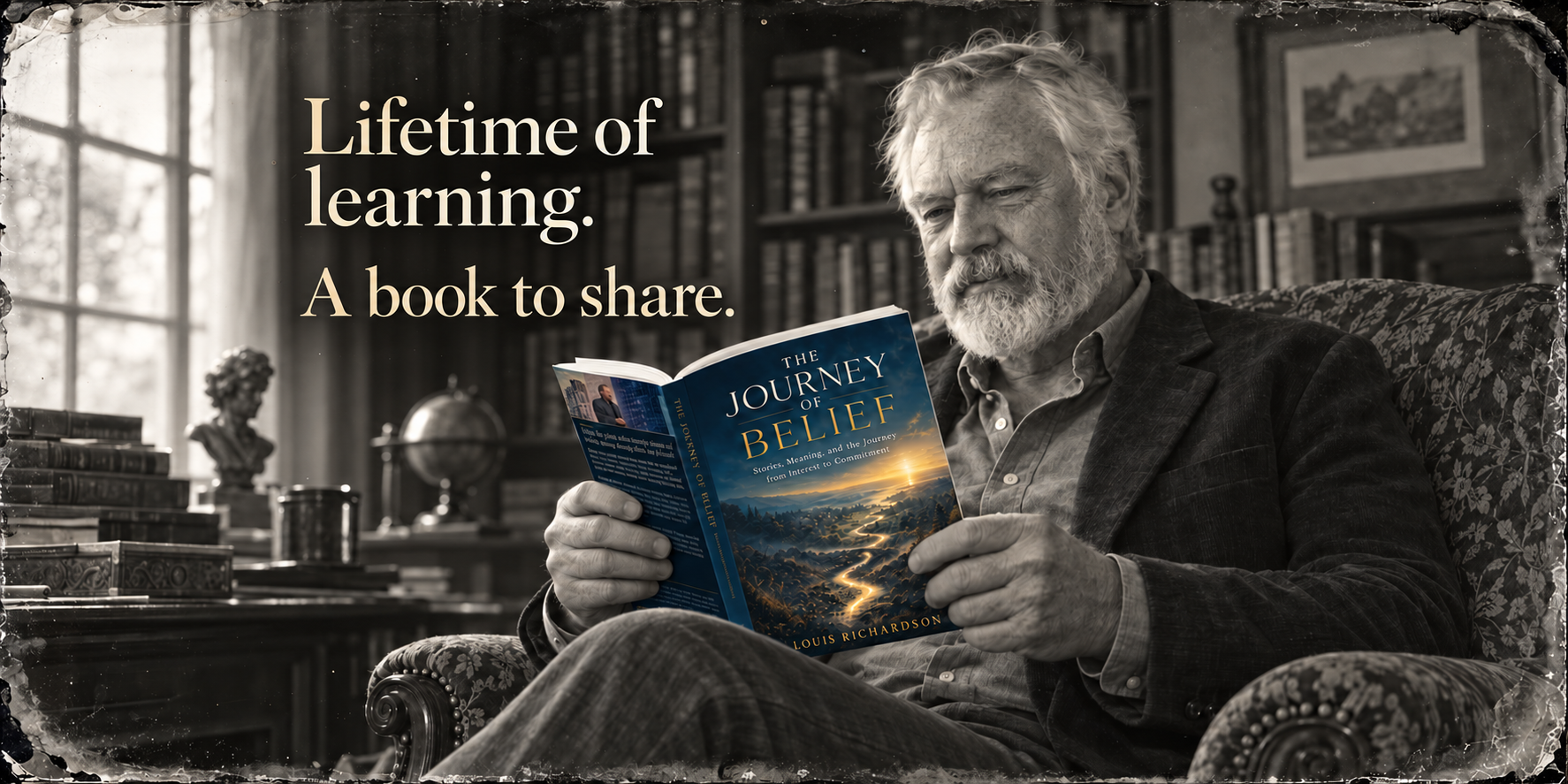
Today is my 69th birthday.
It seems like a fitting time to share a book that has been a long time in the making. Much like me.
The Journey of Belief grew out of decades of conversations, experiences, mistakes, and lessons—and the generosity of people who helped me understand a little more than I did before.
I couldn’t begin to name all the kind souls who nurtured, taught, patiently corrected, and challenged me with their wisdom and experience. So I won’t try.
But if you’re reading this and we’ve worked together, you’re probably on that list.
Over my career, I’ve had the privilege of sharing ideas in more than 35 countries, 75 cities, and 150 events, along with countless training and enablement sessions. In every setting, I’ve had opportunities to learn from the people I came to serve.
Some of those lessons have stayed with me for years. This book is my attempt to pass them along.
Why write a book?
For years, people told me I should write one. I was flattered, but one question kept getting in the way:
“What could I say that they haven’t heard before?”
In 2010, I became a Chief Storyteller at IBM. When I searched LinkedIn early on, I found only five people with that title. These days, storytelling is part of a much wider conversation, and there is certainly no shortage of books about it.
I tried writing a book several times. Nothing quite clicked.
Earlier this year, I returned to an idea from my IBM Watson days: “A man and a machine can do more than a man or a machine.”
I had accumulated years of articles, documents, presentations, and videos. I asked AI to help me examine that material with a question: Was there something here distinctive enough to warrant a book?
What emerged helped me recognize the thread running through my work: how people move along a journey of belief.
That was the moment the book began to take shape.
I used AI as an editor and writing collaborator, helping me examine and refine the material. The experiences, convictions, and decisions about what belonged in the book were mine. It helped me see connections in work I had been developing for decades.
And one thought guided the writing:
Write something I would have wanted to read and learn from when I was just starting out.
Who I wrote it for
I wrote The Journey of Belief for people whose work involves helping others consider a possibility and decide whether to act on it.
That includes sales professionals, leaders, entrepreneurs, teachers, mentors, and coaches. It also includes anyone who has ever explained something carefully and walked away wondering why nothing changed.
My background is in sales, so many of the lessons grew out of that work. But I’ve also encountered them as a father, mentor, and friend.
A customer considering a purchase. A team facing change. Someone trying to imagine a different future. Each brings a story, existing beliefs, and reasons to hesitate.
Helping begins with understanding where that person is.
In the book, I call the distance between what someone currently believes and what they might come to believe the belief gap. Before we can help someone cross it, we need to understand what that gap looks like to them.
That requires curiosity.
What I hope you’ll gain
My hope is that reading this book will change how you approach your next conversation.
You’ll find stories, questions, and practical guidance to help you:
Understand the story behind a stated need. A list of requirements tells you something. Asking “Can you give me an example of when that happened?” can reveal why it matters.
Listen with curiosity. Give people room to finish their thoughts and help you understand before you prepare your response.
Make your message relevant. Connect what you offer to what someone could do, experience, or accomplish because it exists.
Recognize how belief develops. Explore conversations that build interest, establish relevance, open a credible vision of what’s possible, and allow people to express that understanding in their own words.
Help people discover their own answers. Ask questions that let them put the final piece of the puzzle in place.
That last idea has become especially important to me.
Sometimes we’re so eager to help that we give people the answer before they’ve had a chance to discover it. But when someone makes a connection for themselves, it becomes theirs.
And sometimes their answer is better than the one we had in mind.
I’ve experienced that more than once. I thought I knew where a conversation was going, only to have the other person see a possibility I hadn’t considered.
Those moments remind me that serving someone requires room for their judgment, their imagination, and their choice.
The book offers guidance you can bring into your own circumstances. My hope is that you’ll try something, observe what happens, and keep learning.
Why sharing matters to me
Years ago, reading George Gilder’s Telecosm, I encountered an idea that stayed with me: the speed of light and the span of life as two fundamental measures of our limits. His discussion of those measures prompted a very personal reflection.
We begin learning when we’re born. If we remain willing, we can continue learning throughout our lives.
But the lessons we collect—the experiences, discoveries, questions, and insights—can end with us unless we share them.
Sharing gives someone else the opportunity to carry a lesson forward, test it, improve it, and make something of it in their own life.
So much of what I know came from people willing to do that for me.
At 69, I feel a responsibility to offer some of it back.
The Journey of Belief is part of that offering.
If you choose to invest your time in reading it, I hope you’ll find something that helps you listen more carefully, ask a better question, or serve someone more thoughtfully.
And I’d love to hear what you discover—especially if it’s something I didn’t realize I was teaching.
Writing this book has also made something clear to me: I want to keep doing this work, in person, with people.
If you’re planning a sales conference for early 2027, bringing entrepreneurs together, or helping a team communicate its ideas more effectively, I’d welcome a conversation about how I might serve your group.
That could mean sharing the message from the stage or working alongside your team to apply it to their own conversations: asking better questions, understanding the story behind a customer’s needs, and helping people see a possibility they can believe in.
The book gives us a place to begin. I’m excited about what we might do together from here.
You can explore those possibilities at louisrichardson.com/speaking.
You can learn more about the book at louisrichardson.com.
To everyone who has poured into my life: thank you.
There’s a little of you in these pages.
PASS IT ALONG
Continue the conversation
What did this idea awaken in you?
If this idea stirred a thought or question, send Louis a private response.